
Amplify Science: Matter & Energy in Ecosystems
Making the invisible visible
Client: Amplify Science
Role: Product Designer & Illustrator
Design Director: Thomas Maher
Scope: UX Design, UI Design, Concept Art, Illustration
Amplify Science creates interactive digital curriculum in partnership with UC Berkeley’s Lawrence Hall of Science to help students investigate scientific concepts.
For the Matter & Energy in Ecosystems unit, I worked with the Design Director and curriculum developers to create an interactive simulation that helps students visualize how molecules and energy move through an ecosystem.
The simulation makes these invisible processes visible: students can track molecules as they move between the atmosphere, plants, animals, decomposers, and dead matter. By changing conditions within the ecosystem, they can observe how those changes affect the system as a whole.
My role spanned early wireframes and UX design through visual development and illustration for the final simulation.

Turning science into interaction
The curriculum team began with rough concepts outlining the scientific relationships students needed to understand: how different molecules move between living and nonliving parts of an ecosystem, how energy enters through sunlight, and how processes like photosynthesis and cellular respiration connect the system.
Working from those requirements, I developed wireframes to organize these relationships into an interactive model. The interface needed to show different parts of the ecosystem simultaneously, while giving students controls to change conditions and observe what happened as a result.
The process was highly iterative. Working closely with the Design Director and curriculum team, we refined the interactions and information hierarchy, balancing the complexity required by the learning standards with an interface that remained clear and usable for students.
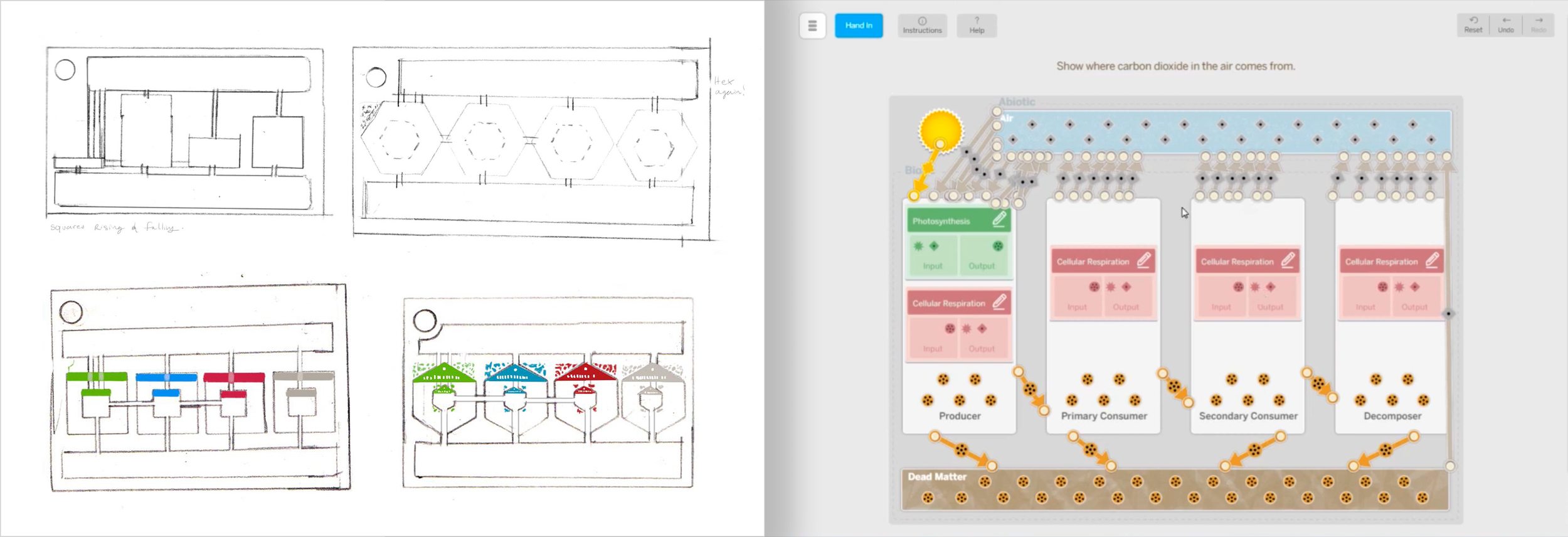
Early explorations and wireframes testing how the components, processes, and controls of the ecosystem could be organized on screen.
From structure to visual world
Once the functionality and overall interface structure were established, I began developing the visual direction for the simulation.
The interface elements followed the standard Amplify Science UI system, while the simulation itself needed a specific visual environment. I developed concept art and illustrations that transformed the abstract model into a recognizable living world of plants, animals, decomposers, soil, and atmosphere.
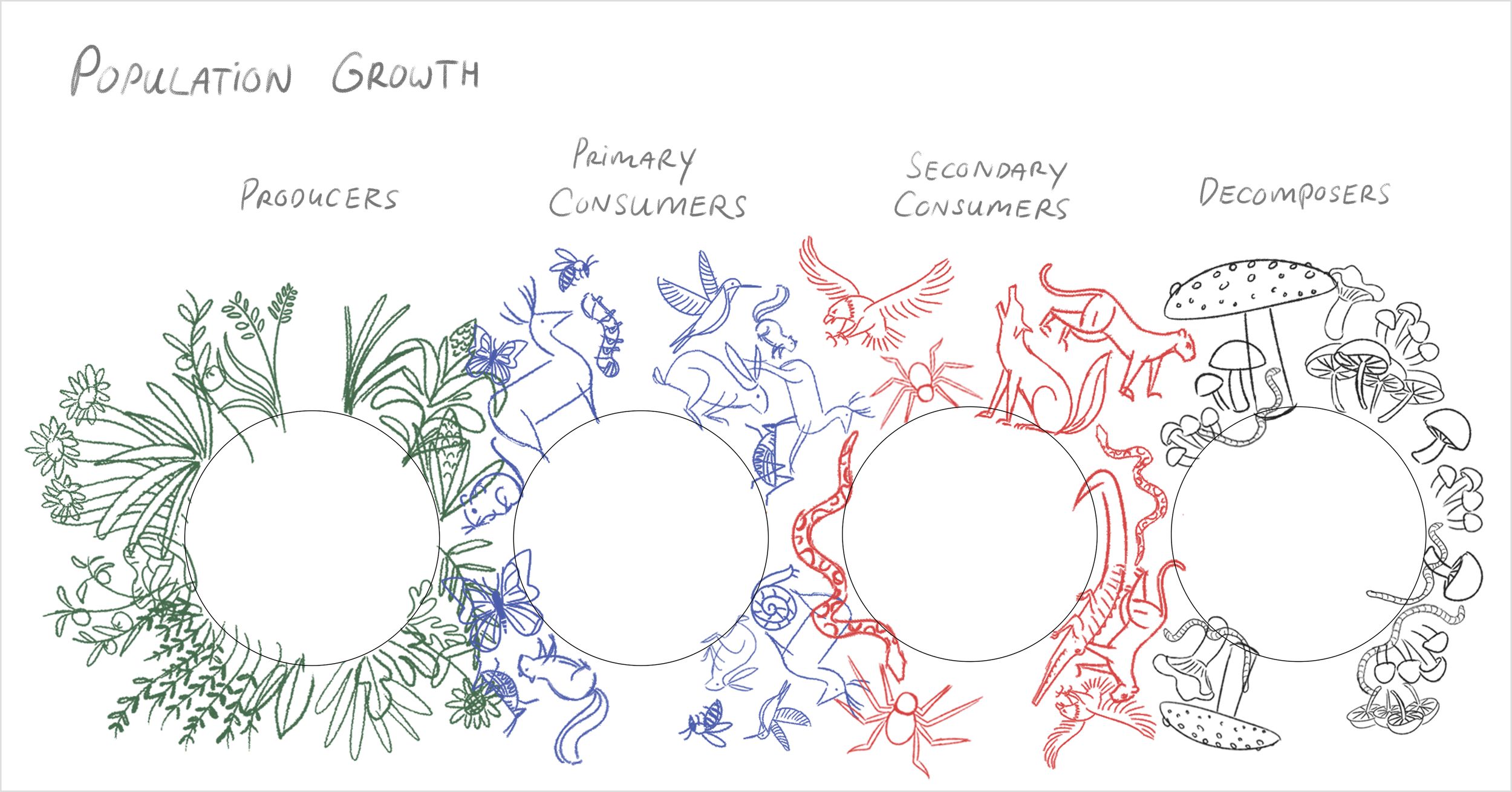
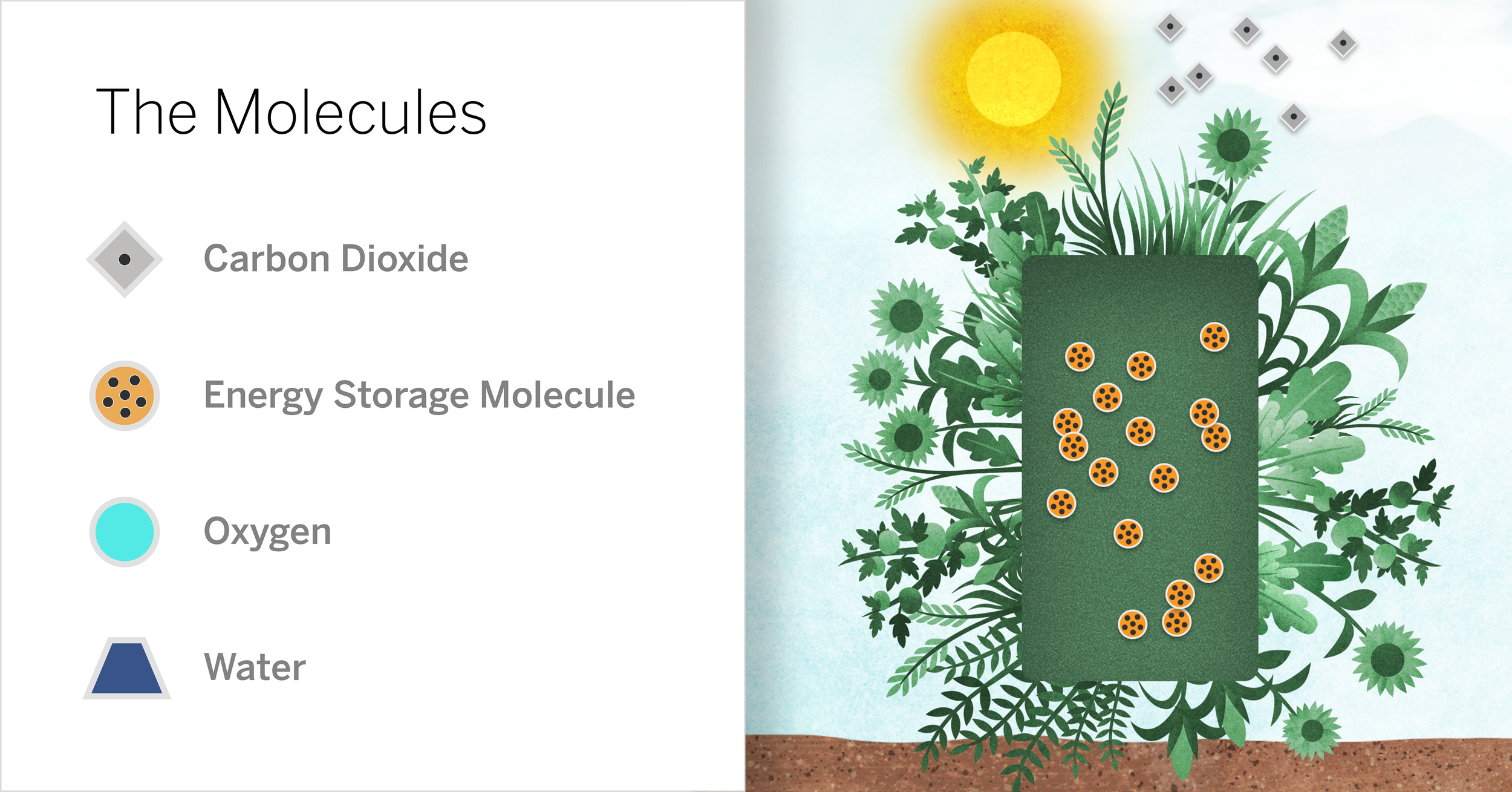
The visual environment had to support the science rather than compete with it, giving students enough context to understand what they were looking at while keeping the movement of molecules and energy legible.



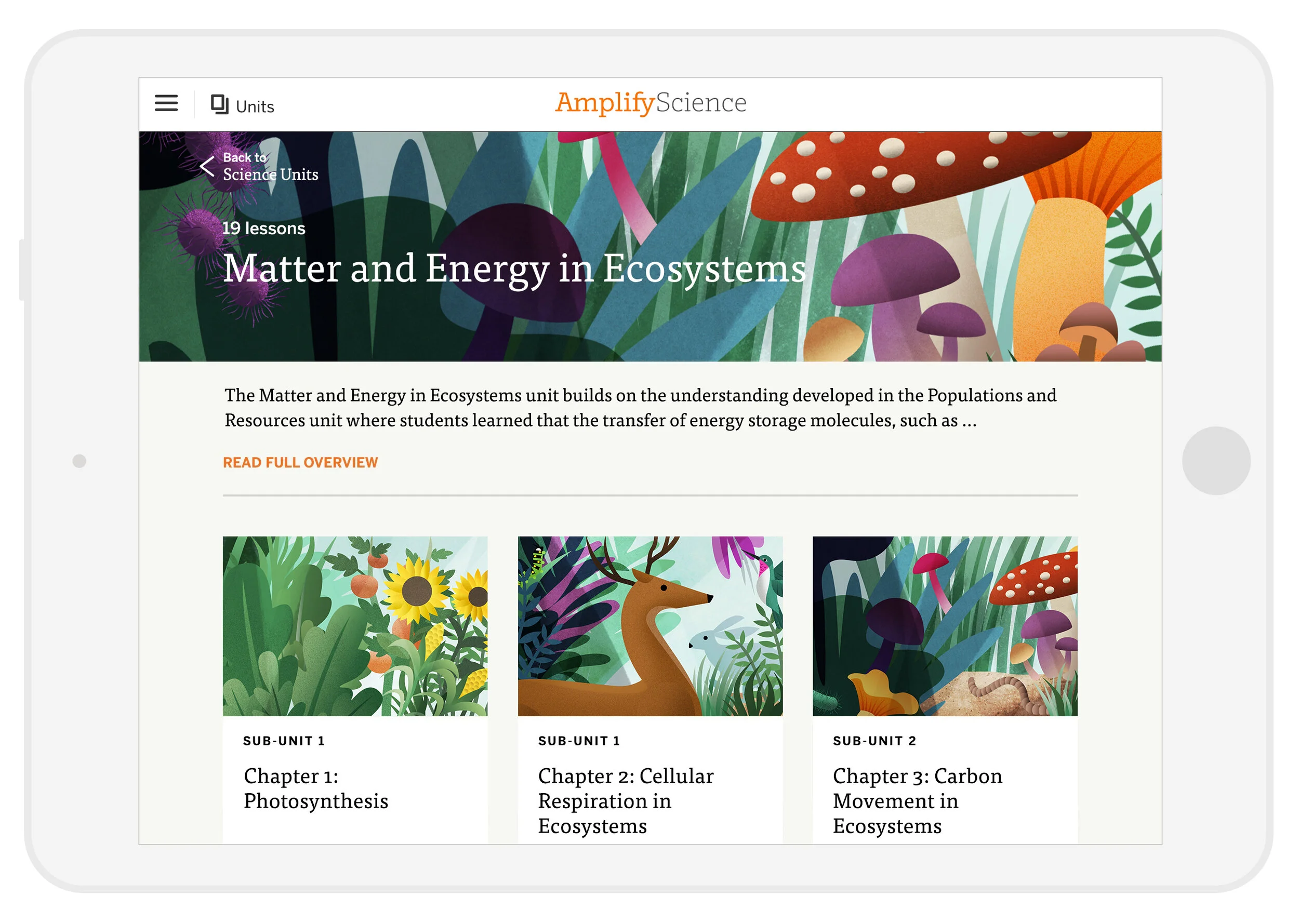
Seeing the ecosystem in motion

The final simulation allows students to manipulate conditions and observe how changes ripple through the ecosystem. They can adjust sunlight, change populations, then watch how different molecules respond throughout the system.

Students can also move from the ecosystem scale down to the cellular level, where they can see how photosynthesis and cellular respiration move different molecules (carbon dioxide, water, oxygen, and energy-storage molecules) within the cells.
Together, the interface, interaction, and illustration turn processes that would otherwise be invisible into something students can see, manipulate, and investigate.

